



Inmiddels, eind 2025, ben ik al m'n halve leven (zo'n 37 jaar) bezig met fuchsia's, die omdat het merendeel niet tegen vorst kan elk jaar moeten worden binnengehaald. Het is ieder jaar weer een uitdaging om het allemaal voorelkaar te krijgen en ze goed op te bergen zodat ze het volgende voorjaar nog leven en weer uitlopen.
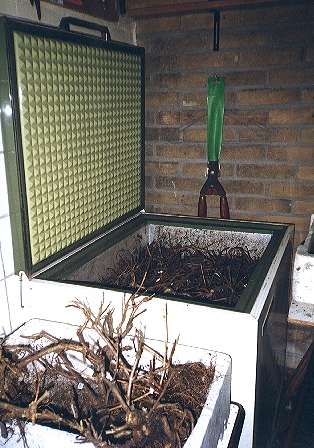 Ik heb tegenwoordig meer potplanten dan vroeger, maar kuil er nog steeds een groot aantal in, vorstvrij in m'n schuurtje in een afgedankte vriezer onder droge turfmolm; in de loop der jaren is mijn aanpak echter toch wel hier en daar wat veranderd.
Destijds wachtte ik tot de eerste vorst en haalde dan de héle tuin leeg - iets wat ik nu fysiek ook niet meer voor elkaar zou krijgen, maar ik doe het sowieso anders; niet de hele planten meer binnenhalen en dan later afknippen, want ik snoei ze nu eerst helemaal tot op 't hout terug voordat ik ze uit de grond of de bloembakken haal, zodat ze veel minder volume innemen als ik ze daarna rooi, de grond zoveel mogelijk uit de wortels prik met een puntig Chinees eetstokje en tenslotte in piepschuimen bakken te drogen leg, in de garage als het niet vriest en anders in 't schuurtje. Het duurt een paar weken voor ze droog genoeg zijn om in te kuilen.
Waar ik geheel van ben afgestapt is het wassen van de planten, en het dompelen in water met een schimmelwerend middel. Ik gebruik helemaal geen vergif meer, omdat ik dat voor mezelf niet gezond vond, maar ook niet voor het milieu. En m'n ervaring is dat het qua resultaat heel weinig uitmaakt, als ik maar zorg dat de turfmolm behoorlijk droog is en de planten ook; meestal is de aanhangende grond aan de wortels kletsnat van de herfstregens wanneer ze gerooid worden, maar dan moeten ze drogen tot die grond ècht droog is en vaak moet er later nog wat aarde uit de wortels worden geprikt, dan laat het ook makkelijker los. En daarna in de turfmolm, zonder verdere behandeling; ik strooi de turfmolm ertussendoor en overheen, tot de hele bak gevuld is en de planten er niet meer bovenuit steken. Deksel erop, en na ongeveer 2 maanden eens kijken, en even luchten, daarna deksel weer dicht.
Zo'n oude vriezer is aardig geïsoleerd waardoor er minder temperatuurschommelingen zijn dan in de omgeving, maar voor het inkuilen in turfmolm kan ook een zuurkoolvat o.i.d. worden gebruikt, daar deed ik de afgeknipte fuchsia's de eerste jaren in, voor ik de kapotte vriezer van m'n buren kon krijgen. Dat is uiteraard minder goed geïsoleerd maar het werkte ook prima. Als de planten maar donker, koel en vorstvrij staan.
Omstreeks half april (afhankelijk van het weer - als het lang erg koud is, wordt het wat later) haal ik de planten pas weer uit de vriezer, zet ze dan rechtop in de piepschuim bakken in dezelfde turfmolm, en zet die op een beschut plekje achter in de tuin.
Sommige zijn in de turfmolm al uitgelopen met bleke witte stengels, maar die verdrogen voor het merendeel als ze eenmaal buiten staan. Na een paar weken komen er groene puntjes aan de schijndode takken - en natuurlijk zitten er ook altijd wel enige tientallen planten bij, die nooit meer uitlopen - maar er blijven er meestal genoeg over, zeker ook omdat er ook veel in potten blijven staan en er nog jonge plantjes zijn die ik in bakken overgehouden heb in de schuur en in de vensterbank van de slaapkamer. Het wisselt trouwens sterk, hoe de planten zich gedurende de winter houden - een paar jaar geleden was bijna 50% van de ingekuilde fuchsia's dood, maar toevallig het afgelopen voorjaar (2025) viel het heel erg mee, nog geen 10% had het loodje gelegd. Wat de stekken betreft eigenlijk hetzelfde verhaal - soms lukt het om er veel te laten bewortelen, en andere keren lukt dat bijna niet zodat er weinig jonge planten zijn. Een verklaring heb ik er niet voor.
Na ongeveer 2 maanden in de bakken te hebben gestaan zijn de meeste planten wel zover uitgelopen dat ze weer in bloembakken of de volle grond kunnen worden uitgeplant. 't Is soms moeilijk om alles een goed plekje te geven - ik heb niet zo'n grote tuin.

